
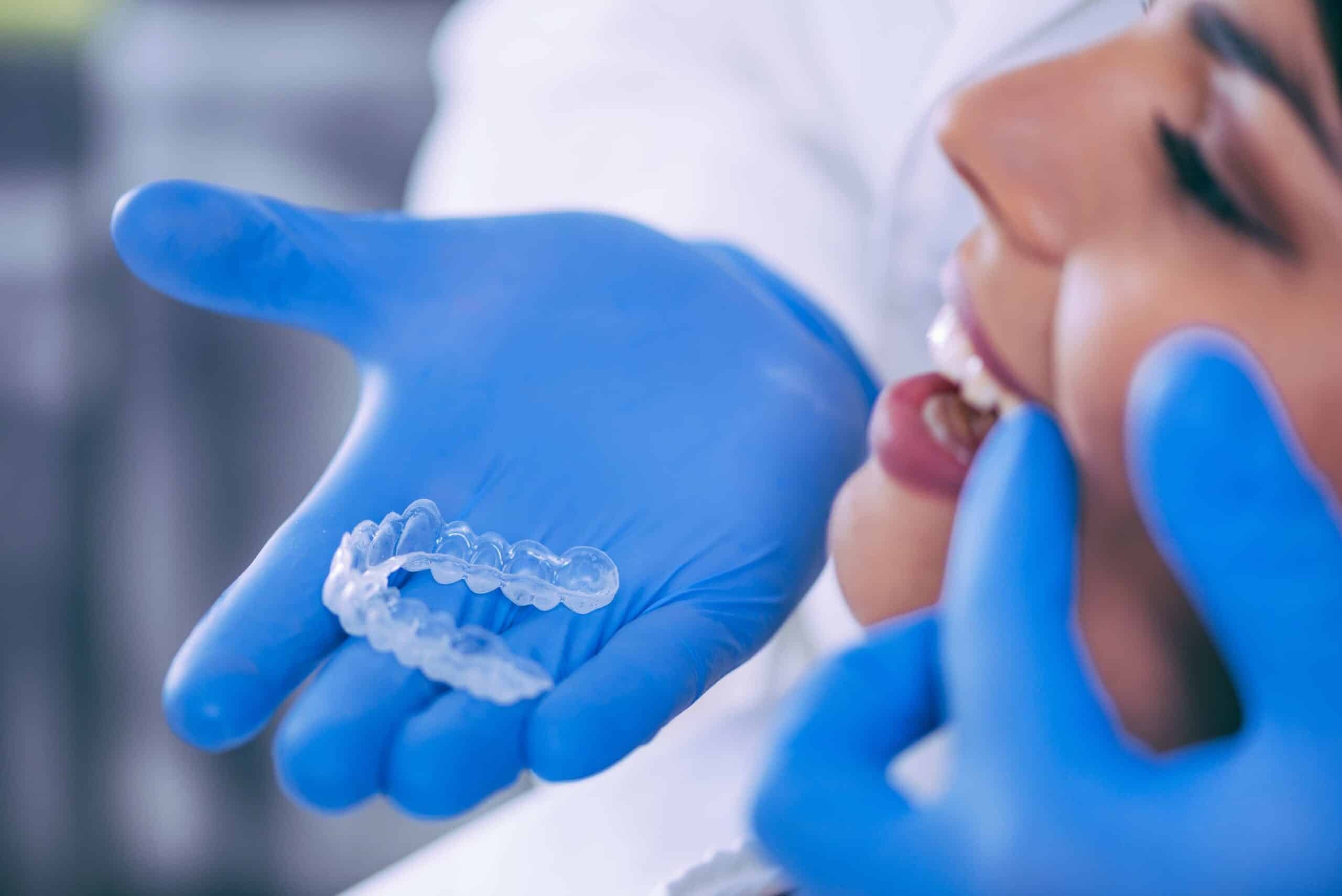
Invisalign can straighten teeth without brackets or wires, but clear aligners are not a shortcut around oral health. Teeth still move through bone, pressure still affects the gums, and aligners cover the teeth for most of the day.
That matters because some dental problems remain quiet until treatment begins. A small cavity may not hurt. Early gum disease may cause little more than occasional bleeding. An old filling can appear stable while hiding decay underneath it.
The CDC reports that one in five American adults between ages 20 and 64 has at least one untreated cavity. Meanwhile, more than two in five adults age 30 or older have some form of periodontal disease. These conditions are common enough that beginning treatment without a proper examination is a gamble your smile should not have to take.
For anyone considering Invisalign in Hillsboro, the first question should not be how quickly treatment can begin. It should be whether the teeth, gums, and supporting bone are healthy enough to move safely.
Invisalign Does Not Create Every Problem
Invisalign itself does not cause gum disease, cavities, or damaged enamel. Problems usually develop or worsen when an existing condition is overlooked or when daily habits allow plaque, acids, and bacteria to remain trapped beneath the aligners.
Because trays fit closely over the teeth, putting them back in after drinking soda, coffee, sports drinks, or sweetened beverages can hold acids and sugars against the enamel. Poorly cleaned teeth or aligners can create the same issue.
This is why Invisalign should begin with X-rays, digital scans, an examination, and coordination with your general dentist when treatment is needed first.
Hidden Problems That May Complicate Invisalign
| Hidden condition | Why it matters during treatment | Possible warning signs |
| Untreated cavities | Aligners may trap plaque and acids against weakened enamel | Sensitivity dark spots or pain when biting |
| Gum disease | Moving teeth without stable support may increase complications | Bleeding swelling or persistent bad breath |
| Gum recession | Tooth movement may expose more of an already vulnerable root | Longer-looking teeth or root sensitivity |
| Dry mouth | Reduced saliva increases the risk of decay and irritation | Sticky mouth cracked lips or frequent thirst |
| Enamel erosion | Thin enamel may become more sensitive during treatment | Yellowing smooth edges or temperature sensitivity |
| Failing dental work | Old crowns fillings or bridges may affect tray fit | Rough edges movement or pain around a restoration |
| Teeth grinding | Heavy pressure may damage trays and stress teeth | Morning jaw pain headaches or worn tooth edges |
Active Gum Disease Can Put Tooth Support at Risk
Healthy gums and bones hold teeth securely while they move. Periodontal disease damages those supporting tissues and can eventually contribute to tooth loss.
Bleeding during brushing is often dismissed as brushing too hard, but repeated bleeding, swelling, recession, or loose teeth deserves professional attention. Orthodontic treatment may still be possible after periodontal care, although your orthodontist and dentist may need to coordinate treatment and monitor your gums closely.
The American Association of Orthodontists advises that active decay, gum disease, and unstable restorations should be addressed before orthodontic tooth movement begins.
A Small Cavity Can Become a Larger Interruption
Clear aligners are removable, which makes brushing and flossing easier than with fixed braces. The catch is that teeth should be clean before the trays go back in.
Food debris and sugary residue trapped beneath an aligner can remain against the enamel instead of being washed away normally. A cavity discovered midway through treatment may require a filling, a pause in aligner wear, or a new scan if the shape of the tooth changes.
Sensitivity that continues after the normal adjustment period, pain when chewing, or a dark area on a tooth should not be ignored. Laidlaw Orthodontics advises treating cavities before continuing aligner wear when decay develops.
Dry Mouth Removes a Natural Defense
Saliva does more than keep your mouth comfortable. It washes away food particles, controls harmful microorganisms, and supplies minerals that help protect enamel.
Hundreds of medications can reduce saliva production, including some used for high blood pressure, depression, and bladder conditions. Diabetes, Sjogren’s disease, mouth breathing, and dehydration can also cause dryness. Without enough saliva, the risk of cavities and oral infections increases.
Aligners do not necessarily cause chronic dry mouth, but wearing them may make an existing problem more noticeable. Persistent thirst, recurring bad breath, mouth sores, or cracked lips should be discussed before or during treatment.
Your Bite May Be More Complex Than It Looks
Straight front teeth do not always equal a healthy bite. Crossbites, deep bites, missing teeth, bridgework, and significant jaw discrepancies can require a different approach.
Laidlaw Orthodontics generally uses Invisalign for mild to moderate orthodontic concerns and may recommend fixed appliances for more comprehensive or complex treatment. A clinical examination helps determine which option offers better control instead of forcing every patient into the same system.
Why an In Person Evaluation Matters
Online photos can show crowding or gaps, but they cannot reveal root position, bone support, impacted teeth, decay between teeth, or disease below the gumline.
At Laidlaw Orthodontics, the Invisalign process begins with digital scans and X-rays to create a three-dimensional view of the mouth. Follow-up visits allow the team to check whether the teeth are moving as planned.
Dr Andrea Laidlaw is a board-certified orthodontist who completed a postdoctoral residency in orthodontics and dentofacial orthopedics at Oregon Health and Science University. She has practiced in Hillsboro since 2000 and has more than 20 years of experience providing Invisalign treatment.
Patients considering Invisalign in Hillsboro can meet Dr Laidlaw or schedule a complimentary consultation at the East Main Street office.
The safest treatment plan does not ignore hidden problems. It finds them before they become expensive, painful or capable of interrupting your progress.
Frequently Asked Questions
Can Invisalign make gum disease worse
Moving teeth while gum disease is active may increase risks so periodontal health should be stabilized before treatment
Can I start Invisalign if I have cavities
Active cavities should generally be treated before Invisalign to prevent decay from progressing beneath the aligners
Why are X-rays needed before Invisalign
X-rays reveal roots bone levels impacted teeth and hidden decay that cannot be evaluated through photographs or scans alone
Does dry mouth affect Invisalign treatment
Dry mouth can increase plaque cavity and irritation risks because the teeth receive less protection from saliva
Who is a good candidate for Invisalign in Hillsboro
A good candidate has healthy teeth and gums a treatable bite concern and the ability to wear aligners as directed
