
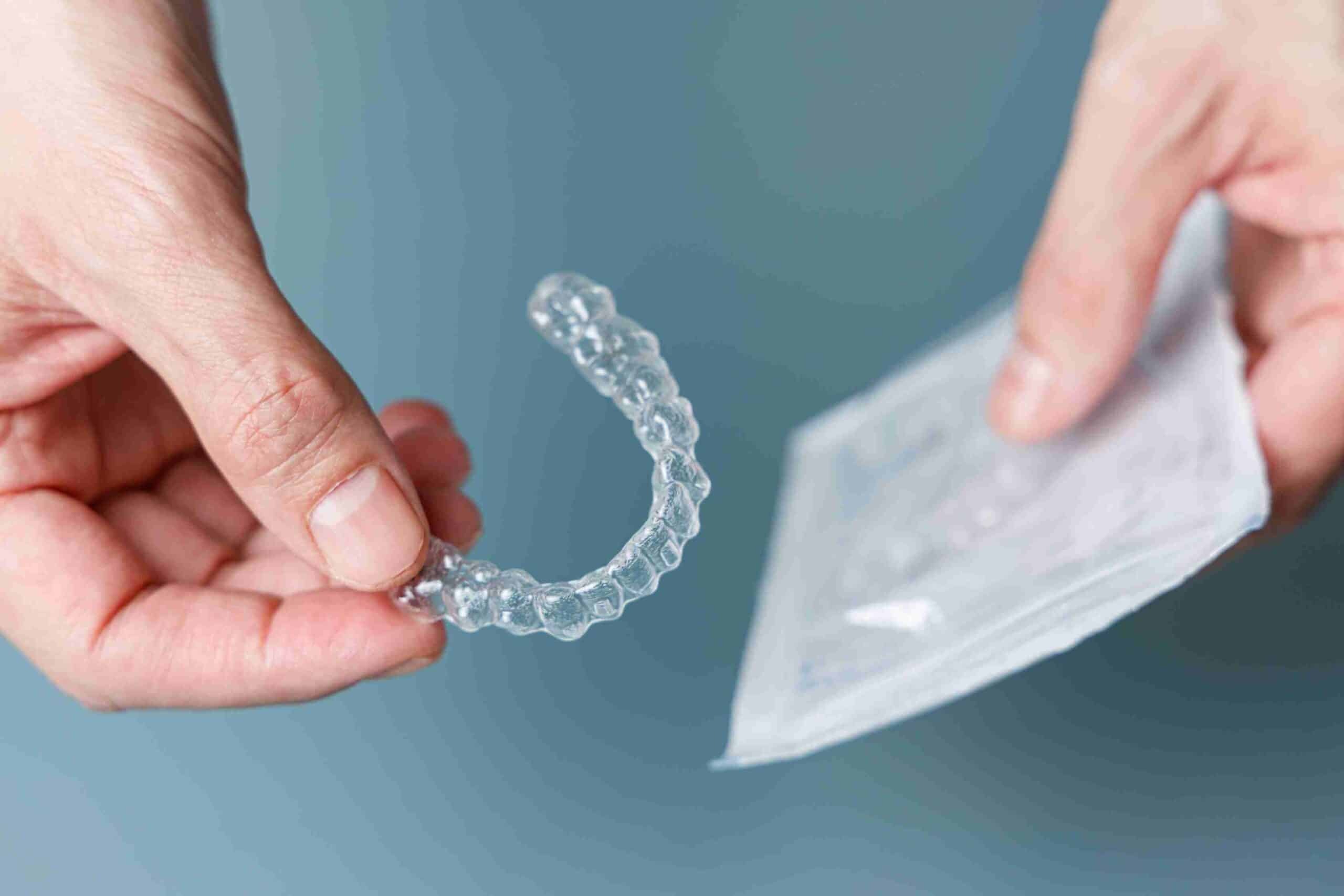
If you’re considering Invisalign, you’ve probably researched how long treatment takes, whether the aligners are comfortable, and whether anyone will notice you’re wearing them. But there’s another question becoming increasingly common:
Can Invisalign and clear aligners release microplastics into your mouth?
It’s a reasonable question.
Clear aligners are made from plastic-based materials and remain in contact with your teeth and saliva for much of the day. Recent research has specifically investigated whether tiny plastic particles can detach from these appliances during use.
The answer is more nuanced than many online headlines suggest. Yes, research has detected microplastic release from clear orthodontic aligners. But researchers have not established that this exposure causes clinically significant health problems in patients.
For patients in Hillsboro, OR, understanding what is known, what remains uncertain, and how to properly care for your aligners is more useful than assuming either extreme.
Can Invisalign Release Microplastics?
Current research indicates that clear orthodontic aligners can release microplastic particles.
A 2025 systematic review examined studies investigating microplastic release from orthodontic clear aligners and their potential implications for human health. The researchers concluded that microplastic release is an emerging area requiring additional investigation.
Then, in May 2026, a scoping review published in the International Journal of Dentistry examined the available literature on microplastics from clear aligners.
Researchers screened 638 records, conducted full-text assessment of 10 studies, and identified six studies demonstrating evidence related to microplastic release from clear aligners.
Their conclusion was important:
Clear aligners can release microplastics, but the health risk associated with that exposure remains unknown. That’s the evidence-based answer patients should hear.
Why Would Clear Aligners Release Plastic Particles?
An aligner is exposed to a demanding environment. It spends hours against your teeth and gums while being exposed to:
- Saliva
- Body temperature
- Friction
- Chewing-related forces
- Repeated insertion and removal
- Cleaning
- Everyday handling
These conditions can affect the surface of polymer materials over time.
Researchers have therefore investigated whether microscopic particles can detach from aligners during simulated use. However, detecting particles doesn’t automatically mean those particles are harmful. Researchers still need to determine how much exposure occurs during normal treatment and whether that exposure produces measurable health effects.
Does This Mean Invisalign Is Unsafe?
No. Current evidence does not establish that Invisalign treatment is unsafe because of microplastic exposure. This distinction is essential. There are three separate questions:
Can particles be released?
Research says yes.
Are patients exposed to those particles during normal treatment?
That is plausible and is being investigated.
Do those particles cause clinically meaningful health problems?
That has not been established.
The 2026 scoping review specifically concluded that the health implications of microplastic release from transparent aligners remain unknown and called for more extensive in-vivo research. So a headline saying “Invisalign releases microplastics” may be technically accurate while still leaving out the most important part of the scientific context.
How Long Do Hillsboro Patients Wear Invisalign?
Wear time matters because aligners remain in the mouth for much of the day.
Laidlaw Orthodontics recommends wearing Invisalign for approximately 20-22 hours per day, removing the trays for eating, drinking anything other than water, brushing and flossing. That extended contact is one reason researchers are interested in aligner material behavior.
But there is currently no established rule stating:
“More hours of wear equals dangerous microplastic exposure.”
Particle release may vary depending on the material, manufacturing process, surface condition, duration of use and other factors. Research has not yet established a clinically meaningful exposure threshold for orthodontic aligners.
What About Scratched or Damaged Aligners?
A damaged aligner should be addressed regardless of microplastic concerns. Cracks, rough edges, warping or significant scratches can affect how the tray fits and how forces are delivered to your teeth.
If an aligner becomes damaged, contact your orthodontic office rather than simply continuing to wear it until the next scheduled tray change. This is particularly important because Invisalign treatment depends on carefully sequenced tooth movement.
Laidlaw Orthodontics explains that patients generally change aligners every one to two weeks, following the treatment plan developed by Dr. Laidlaw.
Can Cleaning Affect the Aligner’s Surface?
Potentially. This is one area where patients can take a practical approach.
Laidlaw Orthodontics recommends cleaning Invisalign aligners with appropriate methods and specifically warns patients to avoid hot water because heat can distort the plastic and affect the tray’s fit. Avoid aggressive or abrasive cleaning methods unless your orthodontist recommends them.
Instead:
- Clean gently.
- Use appropriate water temperature.
- Follow your orthodontist’s cleaning instructions.
- Replace trays according to your treatment schedule.
The goal is to maintain a clean, properly fitting appliance without unnecessarily damaging the material.
Should You Stop Invisalign Because of Microplastics?
Current evidence does not justify stopping prescribed Invisalign treatment solely because microplastic release has been detected.
Orthodontic treatment has an established purpose: controlled movement of teeth to improve alignment and, when appropriate, bite. The microplastic question concerns a potential exposure whose long-term clinical significance has not yet been established.
That means patients should not make a treatment decision based solely on a viral social-media claim. If you’re concerned about aligner materials, discuss the issue directly with your orthodontist.
You may have questions about:
- The material used in your aligners
- Your expected treatment duration
- Cleaning procedures
- Replacement schedules
- Alternative orthodontic treatments
- Your individual risk factors
Are Braces Better Because They Don’t Use Clear Plastic Trays?
Not necessarily.
Traditional braces and clear aligners use different materials and treatment mechanics. Braces use brackets, wires and other components that remain attached to the teeth. Clear aligners use removable plastic trays. Neither treatment should automatically be labeled “safer” based solely on microplastic concerns.The appropriate treatment depends on the patient’s teeth, bite, treatment complexity, oral health, goals and ability to follow the treatment plan.
Laidlaw Orthodontics offers Invisalign, Invisalign for teens, metal braces and ceramic braces, allowing treatment to be selected according to the patient’s specific orthodontic needs.
What About Invisalign for Teens?
Parents may have an additional concern because teenagers can spend much of their day wearing aligners.
Laidlaw Orthodontics offers Invisalign for teens and explains that the aligners can address issues including crowding, spacing and certain bite problems. The practice recommends approximately 22 hours of daily wear as directed by Dr. Laidlaw.
If you’re a parent in Hillsboro, Beaverton, Aloha, Cornelius or Forest Grove and your teen has questions about the materials used in clear aligners, bring those questions to the consultation.
A good orthodontic discussion should address both:
“Will this treatment work for my child’s teeth?”
and
“What questions do we have about the appliance itself?”
What Should Hillsboro, OR Patients Ask Their Orthodontist?
If you’re considering Invisalign, ask:
- What material are my aligners made from?
- How often should I replace each tray?
- How should I clean them?
- What should I do if an aligner becomes damaged?
- How long will I need to wear them each day?
- Would braces be a reasonable alternative for my case?
- How will my treatment progress be monitored?
These questions are more useful than simply asking whether a practice “uses the latest technology.”
At Laidlaw Orthodontics, Invisalign treatment begins with digital scans and X-rays that are used to create a three-dimensional representation of the patient’s mouth and develop custom aligners. Dr. Laidlaw then monitors treatment as patients progress through the aligner sequence. The practice is located at 400 E Main St, Suite #190, Hillsboro, OR 97123 and serves patients from Hillsboro and surrounding communities.
If you’re considering clear aligners, schedule a consultation with Dr. Laidlaw to discuss whether Invisalign is appropriate for your smile.
You can also meet Dr. Laidlaw and the Laidlaw Orthodontics team and ask questions about your treatment options.
What Does the Research Still Need to Answer?
This is where the topic becomes especially important.
Researchers need more human studies examining:
- The number of particles released during normal treatment
- Particle size and composition
- Differences between aligner materials
- Effects of wear duration
- Effects of repeated cleaning
- Whether particles are swallowed
- Whether particles are absorbed
- Whether exposure produces measurable health effects
- Long-term exposure during multi-month or multi-year orthodontic treatment
The 2026 scoping review specifically called for more extensive in-vivo research to determine the health implications of microplastic exposure from transparent aligners. Until that research exists, definitive claims in either direction aren’t justified.
The Bottom Line
Yes, clear orthodontic aligners can release microplastic particles. No, current research has not established that this exposure causes clinically significant harm during normal Invisalign treatment.
The 2025 systematic review identified microplastic release as an emerging concern, while the 2026 scoping review found six studies demonstrating microplastic release but concluded that the health consequences remain unknown.
For patients in Hillsboro, the practical approach is not to panic or dismiss the research.
- Use your aligners as prescribed.
- Clean them properly.
- Avoid hot water and unnecessary damage.
- Replace them according to your orthodontist’s instructions.
- And discuss material-safety concerns before beginning treatment.
Laidlaw Orthodontics has more than two decades of Invisalign experience and uses digital scans and X-rays to develop individualized treatment plans.
The science around aligner microplastics is still developing.
Your orthodontic decision should therefore be based on the current evidence, your individual treatment needs and a conversation with a qualified orthodontist, not on the most alarming headline online.
Frequently Asked Questions (FAQ’s)
Can Invisalign aligners release microplastics?
Yes, research has detected microplastic release from clear orthodontic aligners, although the clinical significance of that exposure remains uncertain.
Are microplastics from Invisalign harmful?
Current research has not established that microplastics released from clear aligners cause clinically significant harm during normal orthodontic treatment.
Should I stop wearing Invisalign because of microplastics?
There is currently insufficient evidence to recommend stopping prescribed Invisalign treatment solely because microplastic release has been detected.
How can I reduce unnecessary wear on Invisalign aligners?
Clean aligners gently, avoid hot water and abrasive cleaning methods, and replace each tray according to your orthodontist’s treatment plan.
Are braces safer than Invisalign because they don’t use plastic trays?
There is currently no evidence that patients should switch from Invisalign to braces solely because of microplastic concerns; treatment choice depends on individual orthodontic needs.
