
Having braces is a major step toward achieving a beautiful, aligned smile—but anyone with brackets and wires knows one thing for sure: food gets stuck easily. Whether it’s spinach, popcorn hulls, or tiny food crumbs, these little particles can turn into major annoyances.
If you’re wearing braces, you don’t have to feel embarrassed or frustrated every time something gets caught. With the right techniques, you can quickly and safely remove food debris without damaging your orthodontic appliances.
This guide breaks down the easiest, most effective ways to clean your braces after meals—at home, at work, or even on the go.
Why Food Gets Trapped in Braces So Easily
Braces create small spaces between the brackets, archwires, and rubber bands. These places trap:
-
Seeds
-
Bread crumbs
-
Fibrous vegetables
-
Sticky foods
-
Meat fibers
Even with careful eating, these foods cling to your braces. Getting them out quickly helps prevent:
-
Bad breath
-
Plaque buildup
-
Gum irritation
-
Staining around brackets
-
Delayed treatment progress
That’s why having a few reliable cleaning strategies is essential.
Use a Soft-Bristled Toothbrush for Quick Cleanup
A regular toothbrush remains one of the fastest ways to remove stuck food. You don’t need a full brushing routine after every snack, but a targeted brushing session can be a lifesaver.
How to do it effectively:
-
Tilt the brush at different angles
-
Focus on the brackets and gum line
-
Gently wiggle the brush around areas where food is trapped
-
Use small circular motions
-
Brush for at least 30–45 seconds if you’re between meals
A soft-bristled brush is ideal because it clears debris without causing bracket irritation or wire bending.
Floss Threaders or Orthodontic Floss Are Game Changers
Regular floss doesn’t easily slide under wires, which is why orthodontic flossers are so helpful.
Floss Threaders
These are needle-like tools that help thread floss underneath the wire.
Steps:
-
Slide the threader under your archwire.
-
Pull floss through the loop.
-
Move the floss gently between your teeth.
-
Repeat for each tooth that needs cleaning.
Pre-threaded Orthodontic Floss
This floss comes with a stiff tip pre-attached, making the process faster.
Both options remove meat strands, fibrous foods, and sticky pieces that brushing alone may miss.
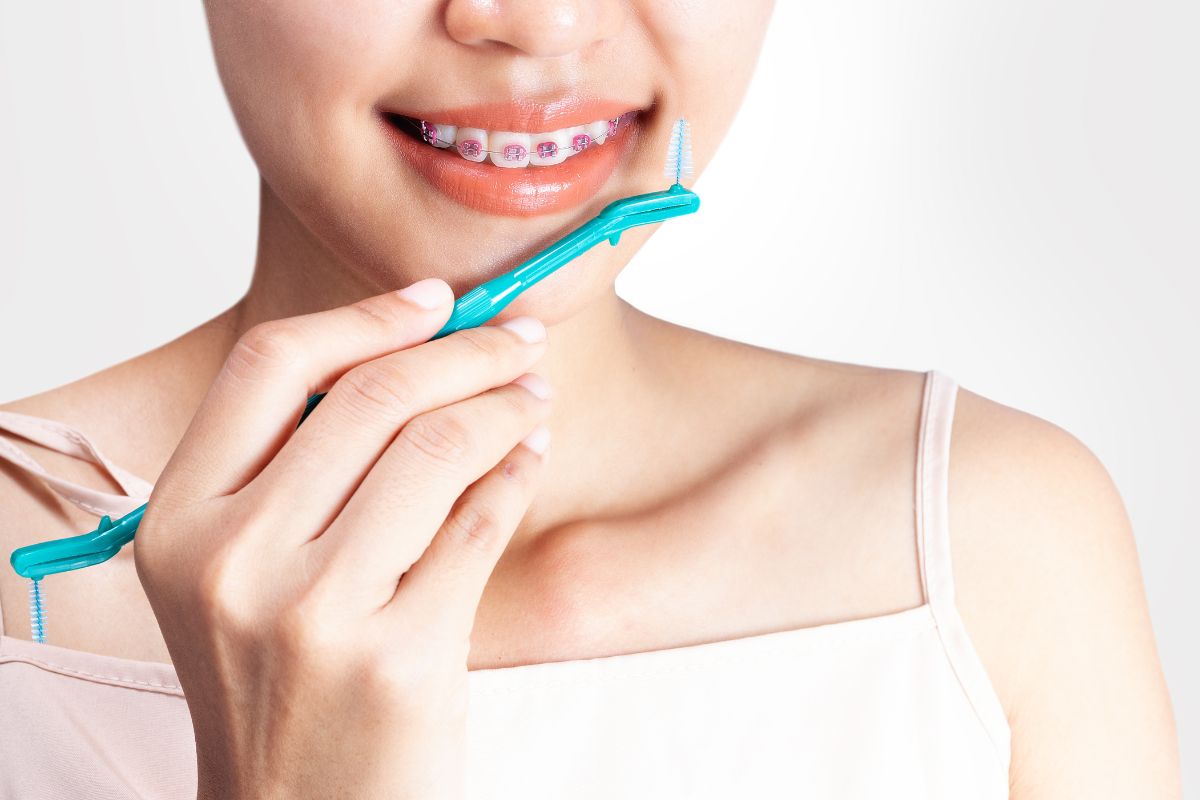
Try an Interdental Brush for Tight Spots
These tiny, cone-shaped brushes are perfect for reaching tricky areas.
Use them to clean:
-
Between brackets
-
Under wires
-
Around bands
-
Near the gum line
They slip into small spaces, knocking out food particles that toothbrush bristles can’t reach.
Bonus: They’re super travel-friendly, making them a must-have for your braces cleaning kit.
Rinse With Warm Salt Water or Mouthwash
Sometimes the simplest method works best.
Warm Salt Water Rinse
-
Mix ½ teaspoon of salt into a cup of warm water
-
Swish it around your mouth for 20–30 seconds
-
Repeat if needed
This removes loose debris and reduces irritation.
Mouthwash Rinse
A swish of mouthwash can help dislodge food while also freshening breath.
Rinsing is especially helpful if you’re in public and don’t have tools with you.
Use a Water Flosser for Deep Cleaning
Water flossers use a thin stream of pressure to blast away food and plaque. Many orthodontic patients swear by them.
Benefits include:
-
Reaches under wires
-
Cleans along the gumline
-
Removes sticky and soft food particles
-
Keeps gums healthy
-
Reduces inflammation
Your orthodontist may recommend adding a water flosser to your daily care routine for easier maintenance of your braces.
Avoid Using Sharp or Unsafe Objects
It may be tempting to use:
-
Toothpicks
-
Fingernails
-
Fork prongs
-
Pins or tools
But these can damage wires or injure your gums. Always choose safe cleaning tools instead.
For emergency situations, gently swishing water or using an interdental brush is always safer than poking around with random objects.
Best Foods to Avoid if You Don’t Want Stuff Getting Stuck
Prevention goes a long way. Some foods are notorious for lodging themselves in braces.
Try to limit:
-
Popcorn
-
Shelby corn chips
-
Spinach
-
Broccoli florets
-
Sticky candies (caramels, gummies)
-
Nuts and seeds
-
Tough breads
If you do eat them, be prepared to clean your braces shortly after.
When to Call Your Orthodontist
Getting occasional food stuck is normal. But if you ever notice:
-
A bent wire
-
Loose brackets
-
Persistent gum irritation
-
Pain when cleaning
-
A bad smell that doesn’t go away
Our professionals in Hillsboro can check your appliances and ensure your treatment stays on track.
FAQs
Q. Why does food get stuck so often in braces?
A. Braces have many small spaces around wires and brackets where food easily clings, especially sticky or fibrous foods.
Q. Is it okay to brush right after eating with braces?
A. Yes. Brushing after meals helps keep braces clean and prevents plaque buildup.
Q. Can mouthwash alone remove food from braces?
A. Mouthwash helps loosen small particles, but for larger pieces, brushing or using tools like floss or interdental brushes works better.
Q. Are water flossers safe for braces?
A. Absolutely—they’re one of the best tools for keeping braces clean and improving gum health.
Q. What if food is stuck and won’t come out?
A. Try rinsing, brushing, or using an interdental brush. If it still won’t move, contact your orthodontist rather than forcing it.
Q. Do certain foods stick more than others?
A. Yes. Sticky, crunchy, and stringy foods tend to cling more, especially popcorn, seeds, and fibrous vegetables.
A Cleaner Smile Makes Braces Easier
Keeping your braces clean doesn’t have to feel overwhelming. With the right techniques—like brushing at angles, using floss threaders, rinsing well, and keeping a travel kit—you can quickly tackle anything that gets stuck between brackets or wires.
Patients with braces can maintain cleaner teeth, healthier gums, and smoother progress throughout their orthodontic journey with these simple daily habits.
